Kammac’s story began in the early 1980s when our founder, Paul Kamel, travelled all around Lancashire, collecting fresh vegetables and delivering them to the Port of Liverpool. Over three decades later, both Kammac and the logistics industry have evolved beyond recognition. From groundbreaking technologies to the rise of online shopping and innovative tracking methods, we have witnessed it all.
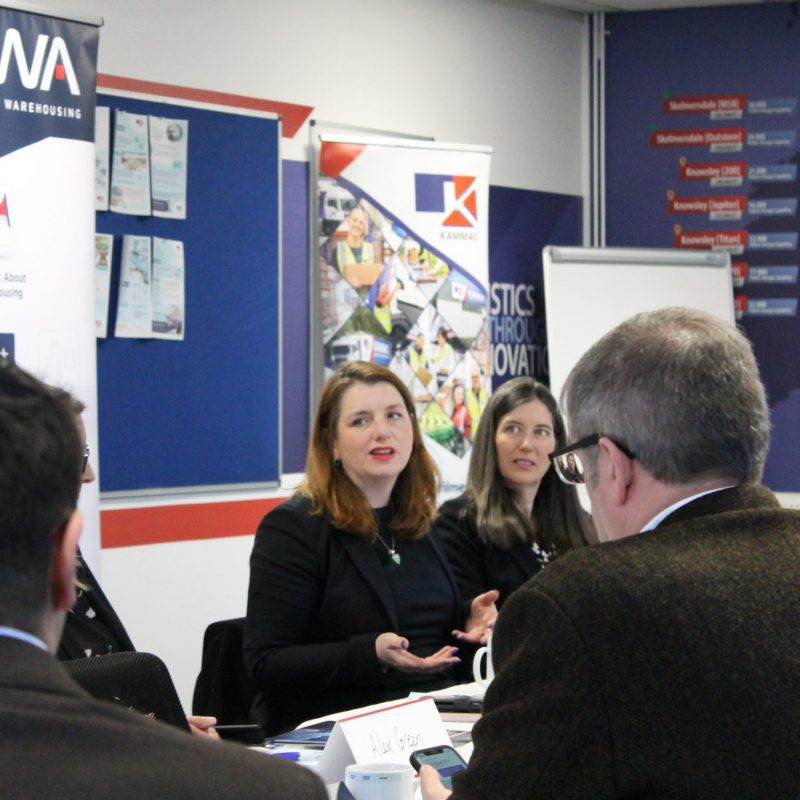
Recently, we were thrilled to host a Roundtable and Logistics and Recruitment Innovation workshop at our Trafford Park site, in collaboration with the Department for Work and Pensions (DWP) and the UK Warehousing Association (UKWA).
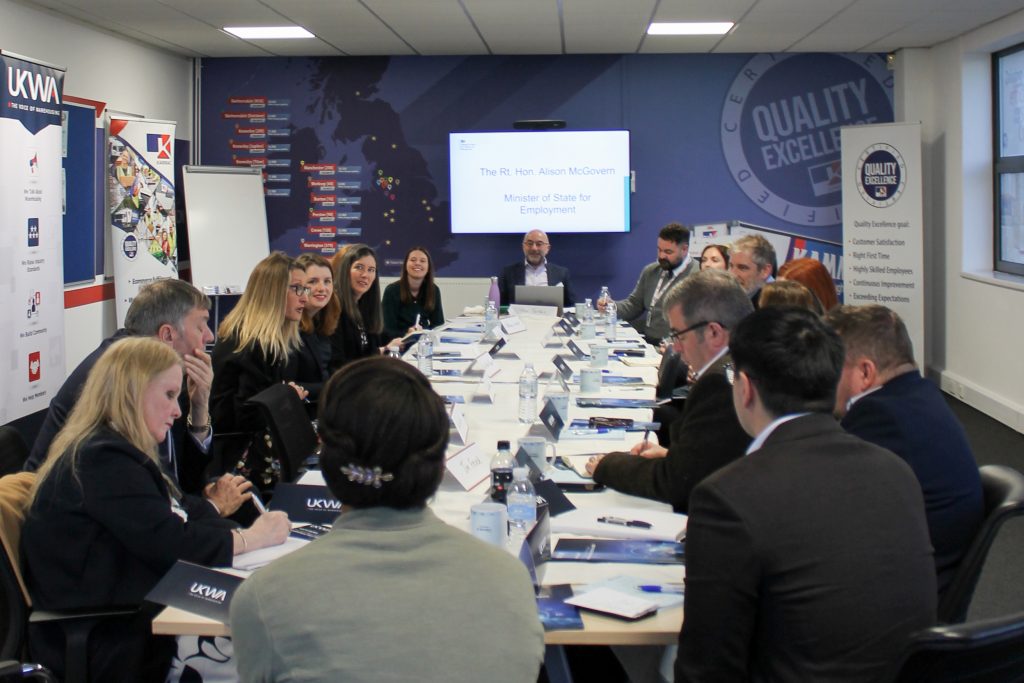
The event drew a diverse crowd, including representatives from the Road Haulage Association, UK Logistics, the DWP, the UKWA, and various logistics companies, both large and small. We were also honoured to welcome Alison McGovern MP, the Minister for Employment, as our special guest. The day was dedicated to discussing the challenges and opportunities in recruitment within the logistics industry and fostering direct dialogue with the government on employment law and recruitment issues.
After warm welcomes from our Head of Operations, Adam Kenny, and Deb Woodcock, Deputy Director for the Strategic Relationship Team of the DWP, Alison McGovern took the stage. She highlighted the pressing issue of the 900,000 young people currently not in employment, education, or training (NEET) and emphasised the need for an inclusive national economy. The minister posed thought-provoking questions including:
What can we do at the DWP to better understand the issues faced by logistics employers?
What can we do to bring everyone along in economic growth?
What does the future look like for the industry?
The ensuing discussion brought to light several core challenges faced by the industry:
- Visibility: Our industry often operates on the outskirts of towns and cities, making it less visible to potential recruits.
- Attraction: We must work harder to attract talent, even compared to lower-paid sectors.
- Awareness: Job advisors often lack clarity on the opportunities available in logistics.
- Adaptation: SMEs struggle to keep up with the rapid pace of change.
- Accessibility: Shift locations and times can make public transportation challenging.
- Perception: The industry is often burdened with stereotypes.
However, the day also unveiled significant opportunities. Industry leaders highlighted the potential for social mobility, digital upskilling, training, development, and flexible hours that can complement family life.
Robert Edwards, Talent Pipeline Manager for GXO, shared inspiring initiatives, including programs for former armed forces personnel, ex-offenders, and prisoners participating in Release on Temporary License (ROTL). These insights have sparked our interest in exploring similar programs to support our ESG mission.
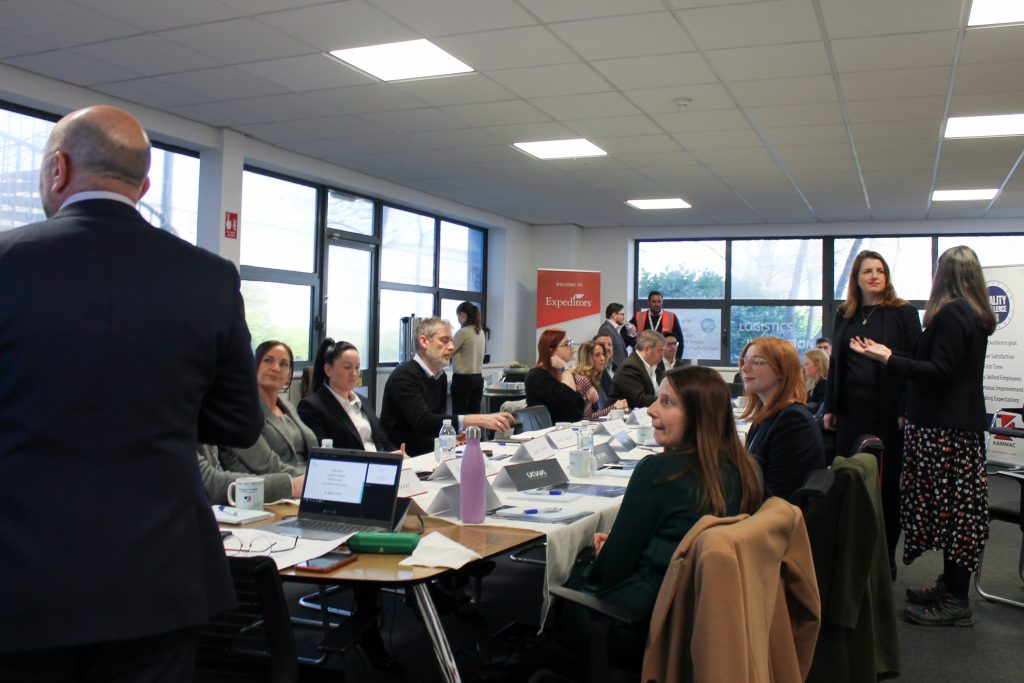
We also heard from Tammy Fevrier of the DWP, whose passion for the development and progression of people was infectious for many of us there. Tammy discussed DWP’s Sector-based Work Academy Programme (SWAP), which matches jobseekers with vacancies through a fully government-funded six-week program. The support available from local job centres for seasonal and peak period work was a pleasant surprise for many attendees.
Tammy was also able to elucidate further on how local growth plans will help to enrich the regional aspects of the forthcoming Industrial Strategy.
Central to this for the DWP will be three focus points:
- The Youth Guarantee – A government initiative which aims to guarantee 18–21-year-olds with access to apprenticeships, training, education, or employment support.
- Jobs and Careers Services – Merging these two departments to help more people into work, and support those seeking better opportunities, with a stronger focus on skills and careers, reflecting local needs.
- Empowering Local Authorities – This will be focussed on partnerships, funding, and streamlining processes at a local level, enabling both jobs and careers services, and local leaders to better reflect the needs of the local economy.
One of the day’s highlights was the opportunity to connect and learn from colleagues across the industry. Conversations ranged from new development areas, such as the proposed Oxford to Cambridge Development Arc, to how logistics will be integrated into the government’s upcoming Industrial Strategy.
At Kammac, we want to embrace change and growth. The willingness to change is what will enable us to train, upskill, and re-skill people in the logistics industry not just for the next five or ten years, but long into the future. After this genuinely educational, and inspiring meeting, we are more committed than ever before. Now is the time to get stuck in, and begin our own journey to making work in logistics more valuable, more attractive, and just better for individuals and society.
Peter Edwards
Marketing Business Partner